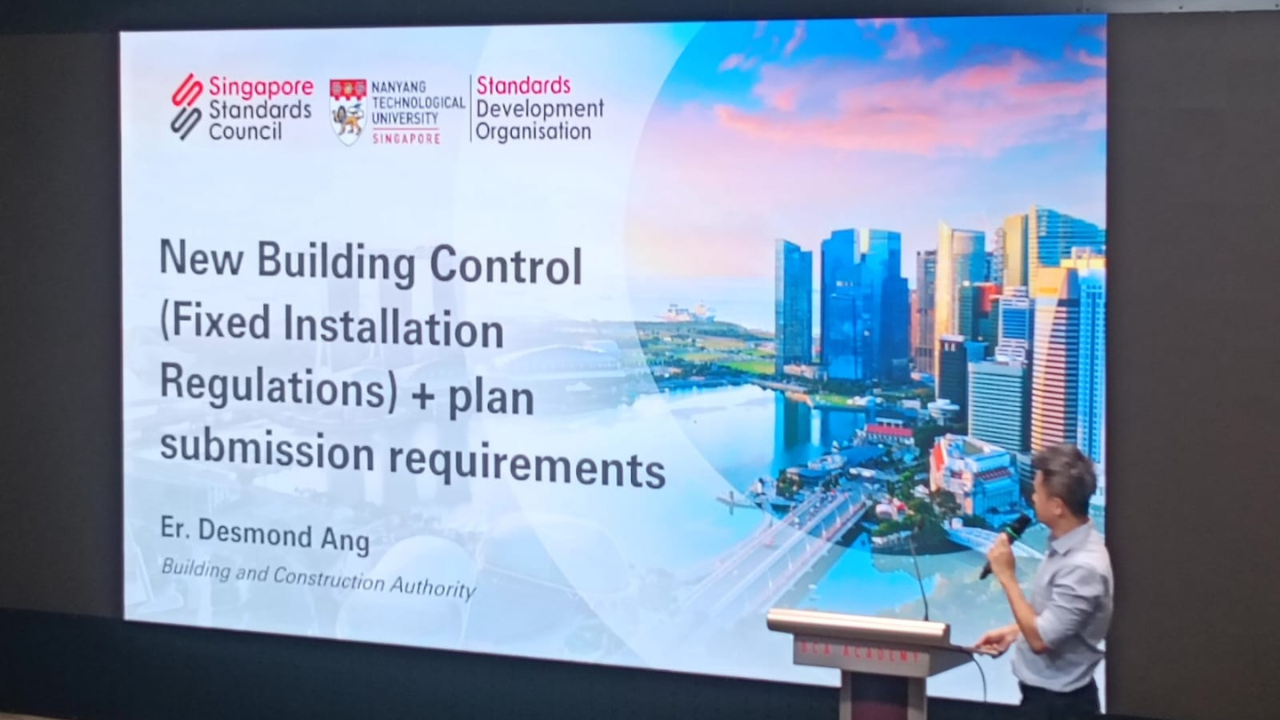
Safety in public spaces is often invisible until something goes wrong. In a city that relies so heavily on escalators and moving walks to keep people moving every day, small oversights can have serious consequences. This reality was front and centre at the recent Safety in Motion: SS 626 seminar, where industry players came together to reflect on how safety standards are evolving, and what responsible implementation really looks like.
Beyond outlining the technical updates, the seminar highlighted a broader shift in how safety is being viewed across the industry. There was strong emphasis on getting things right from the start, not just meeting regulatory requirements on paper, but understanding the intent behind the standard and how it should be applied across the full lifecycle of an escalator or moving walk. Speakers also shared common challenges seen on the ground, particularly where responsibilities between parties are blurred or where compliance becomes a tick-box exercise rather than a meaningful safety check.
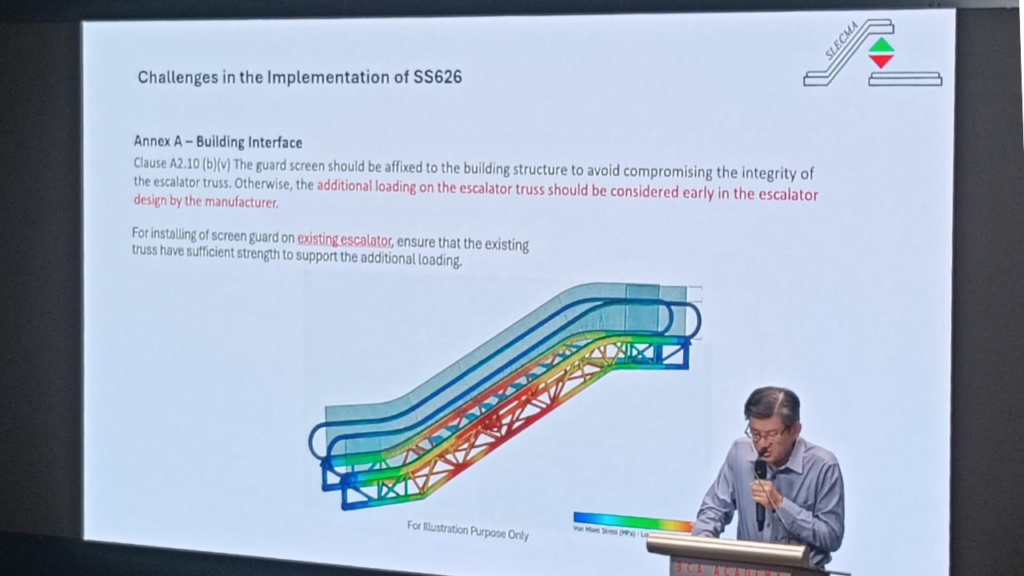
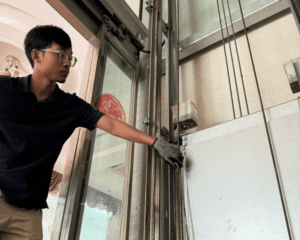
The discussions reaffirmed the importance of independent inspection in protecting public safety. As standards evolve, inspections are no longer just about confirming that requirements are met, but about asking the right questions, reviewing documentation carefully, and identifying foreseeable risks before they become incidents. This reinforces Emaan’s long-held view that compliance alone does not automatically translate to safety but clarity, judgment and accountability matter just as much.
Reflecting on the session, PE Ghazali Embi, Director or Emaan Inspection shared:
“What stood out for us was the reminder that standards are only effective when they are properly understood and responsibly applied. Independent inspection plays an important role in bridging that gap, especially for building owners and operators who are navigating increasingly complex requirements.”
Looking ahead to 2027, Emaan aims to continue strengthening its role as a trusted inspection and advisory partner. This includes supporting clients earlier in the process, helping them interpret standards more clearly, and providing practical guidance that goes beyond minimum compliance. Through this approach, Emaan hopes to contribute in a meaningful way to safer, more reliable vertical transportation systems that the public can trust.