
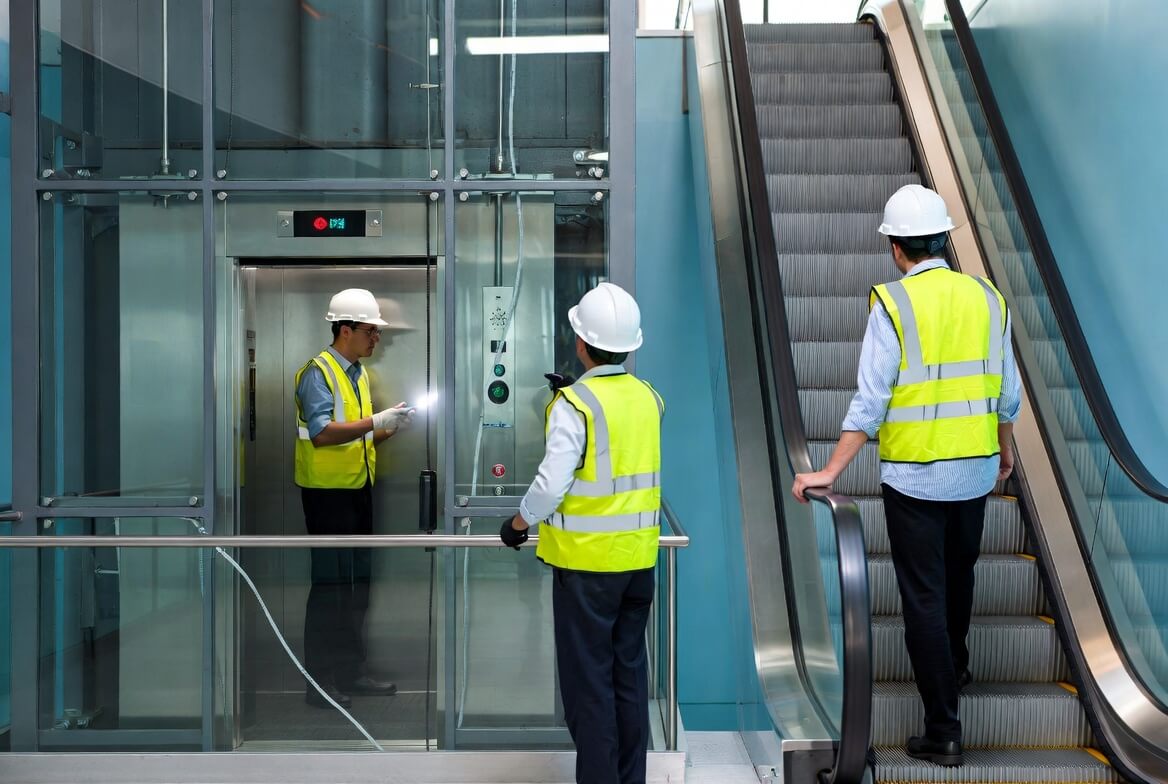
A lift and escalator inspection goes far beyond a visual walkthrough or a simple test ride. It is a systematic assessment of both physical components and supporting documentation to ensure that safety requirements are being met.
On the technical side, inspectors examine safety-critical systems such as brakes, door mechanisms, emergency communication devices, overspeed protection, handrail conditions and electrical safeguards. They look for signs of wear, improper adjustments, or conditions that could compromise safe operation. Even small deviations can matter, especially when systems are used daily by large numbers of people.
Equally important is the review of records. Inspectors assess maintenance logs, previous inspection reports, and evidence that identified issues were resolved properly. Inconsistencies, missing entries, or repeated defects may indicate deeper management issues rather than isolated technical faults.
Inspections also consider operational context. Factors such as usage patterns, age of equipment, environmental conditions, and past incidents all influence how findings are interpreted. A component that appears acceptable on paper may raise concern when viewed in context.
What inspections ultimately provide is a snapshot of safety at a point in time. They confirm whether a lift or escalator meets minimum requirements on the day of inspection. This is why inspections are often complemented by audits, which assess trends and long-term compliance rather than isolated outcomes.
For owners and managers, understanding what is checked helps demystify the inspection process and highlights why consistent documentation and follow-through matter as much as the mechanical condition itself.

![[45] Emaan 2026 (1000 x 350 px) - 2 (1)](https://emaan.com.sg/theengineerscompass/wp-content/uploads/2026/04/45-Emaan-2026-1000-x-350-px-2-1-350x250.jpg)
![[45] Emaan 2026 (1000 x 350 px) - 4 (1)](https://emaan.com.sg/theengineerscompass/wp-content/uploads/2026/04/45-Emaan-2026-1000-x-350-px-4-1-350x250.jpg)