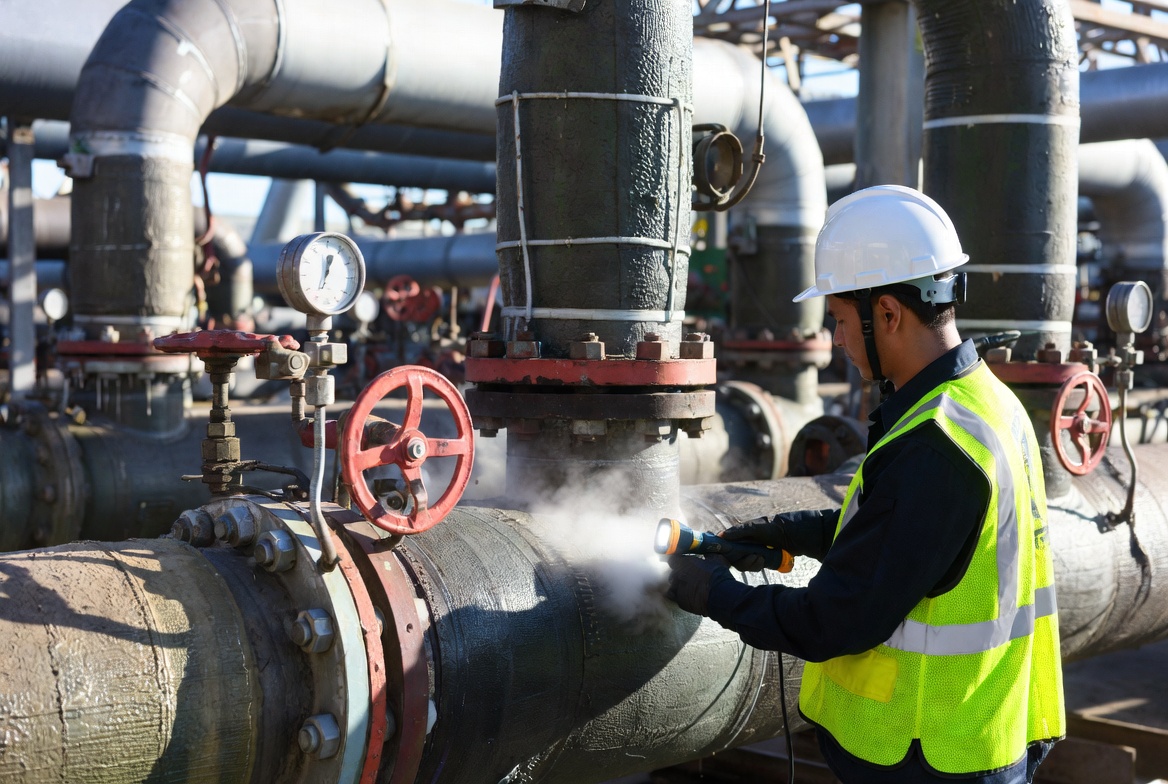
Steam piping inspection is the process of reviewing, testing, and certifying steam piping systems to ensure they are safe to operate under pressure and temperature conditions.
In Singapore, steam piping falls under the regulatory framework of the Ministry of Manpower Singapore. Depending on operating conditions, systems must be assessed before installation, during construction, and prior to operation. This is not merely a technical exercise but a regulatory requirement designed to prevent failures such as leaks, ruptures, or more serious incidents in high-pressure systems.
When Is Approval Required?
A key question many facilities overlook is whether their piping requires approval. According to MOM guidelines, steam piping systems operating above certain pressure thresholds commonly above 5 bar require approval prior to installation, modification, or repair.
The level of oversight depends on factors such as:
- Design pressure
- Operating temperature
- System classification (medium or high pressure)
Higher-risk systems are subject to stricter inspection and approval requirements.
Who Can Carry Out the Inspection?
Steam piping inspections must be conducted by qualified and recognised personnel.
Depending on system classification, inspections may be carried out by either:
- An in-house competent inspector
- A third-party inspection body (TPI)
- A private Authorised Examiner (pAE)
Where required, inspectors must be approved prior to performing their duties and are responsible for ensuring that the system complies with regulatory and engineering standards.
What Does Steam Piping Inspection Involve?
Steam piping inspection is a structured process that ensures the system is safe, compliant, and fit for operation.
Typical requirements include:
- Review and approval of design drawings
- Verification of materials and specifications
- Inspection of welds and joints
- Non-destructive testing (NDT) such as radiography or magnetic particle testing
- Hydrostatic pressure testing
For higher-pressure systems, additional testing requirements apply, including more extensive weld examinations.
Why Steam Piping Inspection Matters
Steam systems operate under high pressure and temperature, making them inherently hazardous if not properly managed.
Failure in steam piping can lead to:
- Sudden release of high-pressure steam
- Injury to personnel
- Damage to equipment
- Operational downtime
Inspection is therefore not just a regulatory requirement—it is a critical layer of protection
Technical Checklist: Are You Inspection-Ready?
For engineers and facility owners, here is a practical checklist to assess whether your steam piping system is ready for inspection and approval:
System Classification
- Have you identified the system’s design pressure and operating temperature?
- Does your system fall under medium or high-pressure classification?
Approval Requirements
- Have you confirmed whether MOM approval is required for installation or modification?
- Has the inspection route (in-house, TPI, or pAE) been determined?
Design & Documentation
- Are piping design drawings complete and approved?
- Do specifications align with recognised engineering standards?
- Are material certificates available and verified?
Inspection & Testing
- Have weld inspections been conducted?
- Is non-destructive testing (NDT) completed where required?
- Has hydrostatic testing been carried out and documented?
Regulatory Readiness
- Has the appointed inspector been approved (if required)?
- Are all reports and documentation ready for submission?
- Is the system fully documented prior to operation?
A Practical Perspective from the Ground
In practice, most delays in steam piping approval do not stem from major design flaws, but from gaps in coordination—unclear system classification, incomplete documentation, or misalignment between engineering and regulatory requirements.
Addressing these early in the process significantly reduces delays and ensures smoother approvals. At Emaan Inspection, we often see that the most effective steam piping projects are not necessarily the most complex, but the most well-coordinated. When design, inspection, and regulatory requirements are aligned from the outset, the approval process becomes significantly more straightforward.
For engineers and facility owners, taking the time to review requirements early and ensuring that inspection pathways are clear can make the difference between a seamless process and one that faces repeated delays.
Keeping Your Systems Safe and Compliant
Steam piping inspection is more than a regulatory step. It is a critical connection point between engineering design, safety assurance, and operational readiness.
Understanding your system, preparing the right documentation, and ensuring proper inspection processes are in place will not only support compliance but protect your people, your equipment, and your operations.

![[45] Emaan 2026 (1000 x 350 px) - 2 (1)](https://emaan.com.sg/theengineerscompass/wp-content/uploads/2026/04/45-Emaan-2026-1000-x-350-px-2-1-350x250.jpg)
![[45] Emaan 2026 (1000 x 350 px) - 4 (1)](https://emaan.com.sg/theengineerscompass/wp-content/uploads/2026/04/45-Emaan-2026-1000-x-350-px-4-1-350x250.jpg)